Route Editor
 Route Scout

| Guide | 0 Triplogs | 0 Topics |
details | drive | no permit | forecast | route |
stats |
photos | triplogs | topics | location |
| 112 | 0 | 0 |
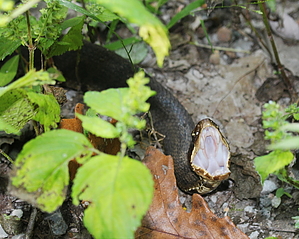
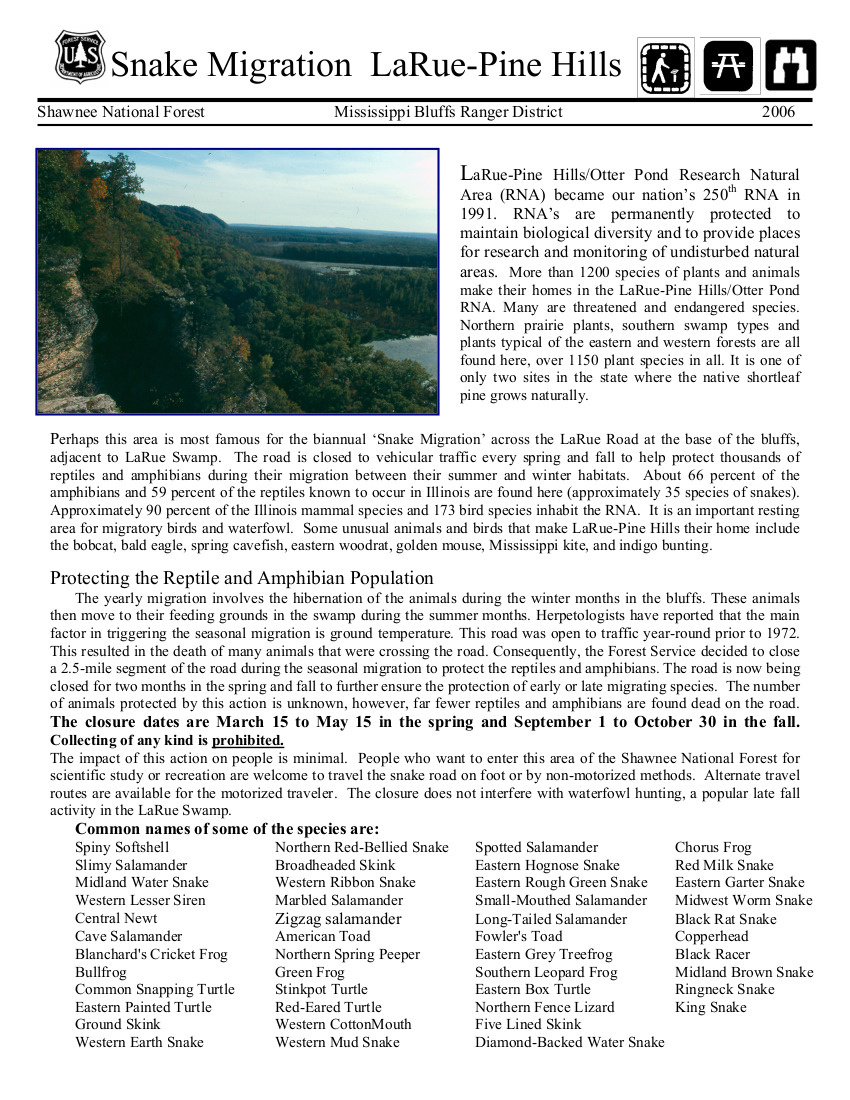
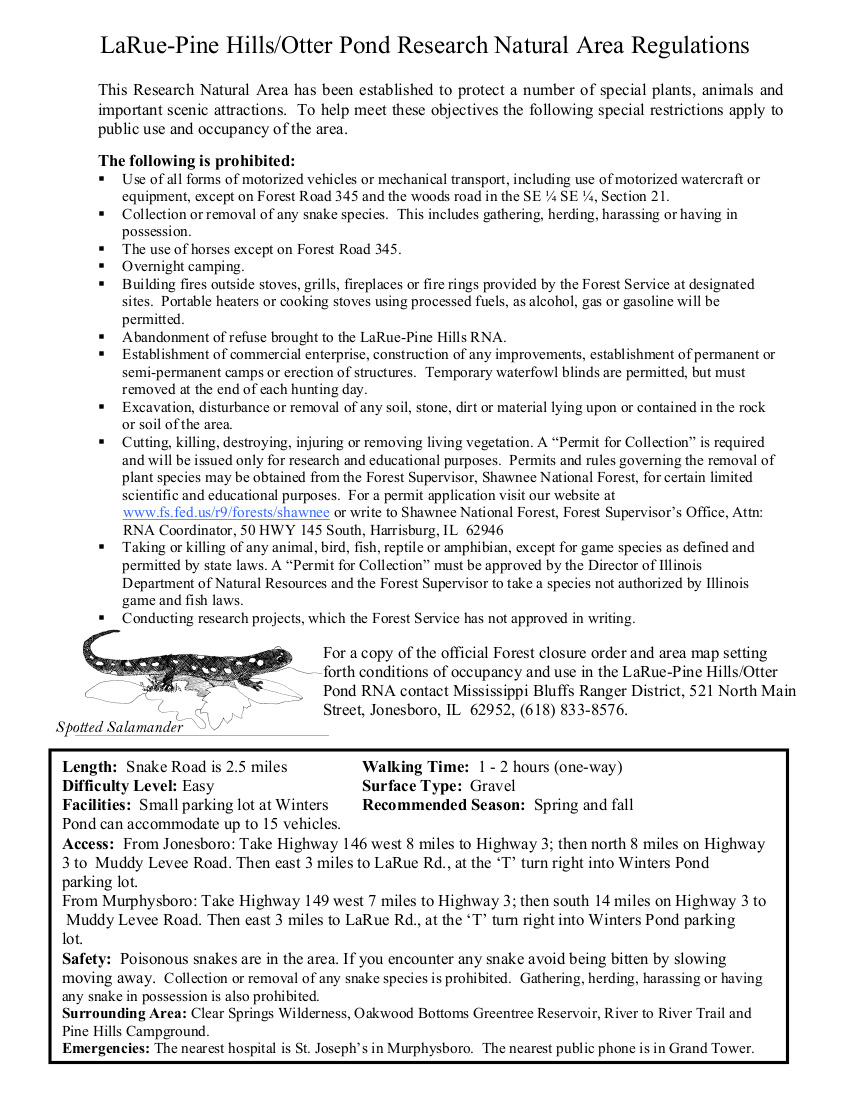
You can never find too many snakes on one hike by gummo  Snake Road lies in the middle of the woods with cliffs on one side, where the herps hibernate, and Larue Swamp on the other side, where they mate and hunt. About 66 percent of the amphibians and 59 percent of the reptiles known to occur in Illinois are found here (approximately 35 species of snakes). Approximately 90 percent of the Illinois mammal species and 173 bird species inhabit the RNA. It is an important resting area for migratory birds and waterfowl. Some unusual animals and birds that make LaRue-Pine Hills their home include the bobcat, bald eagle, spring cavefish, eastern woodrat, golden mouse, Mississippi kite, and indigo bunting. Consequently, the Forest Service decided to close a 2.5-mile segment of the road during the seasonal migration to protect the reptiles and amphibians.
Source: fs.usda.gov pdf
Check out the Official Route. Leave No Trace and +Add a Triplog after your hike to support this local community. One-Way Notice This hike is listed as One-Way. When hiking several trails on a single "hike", log it with a generic name that describes the hike. Then link the trails traveled, check out the example. | |||||||||||||||||||||||||||||||||||||||||||||||||||||||||||||||||||||||||||||||||||||||||